
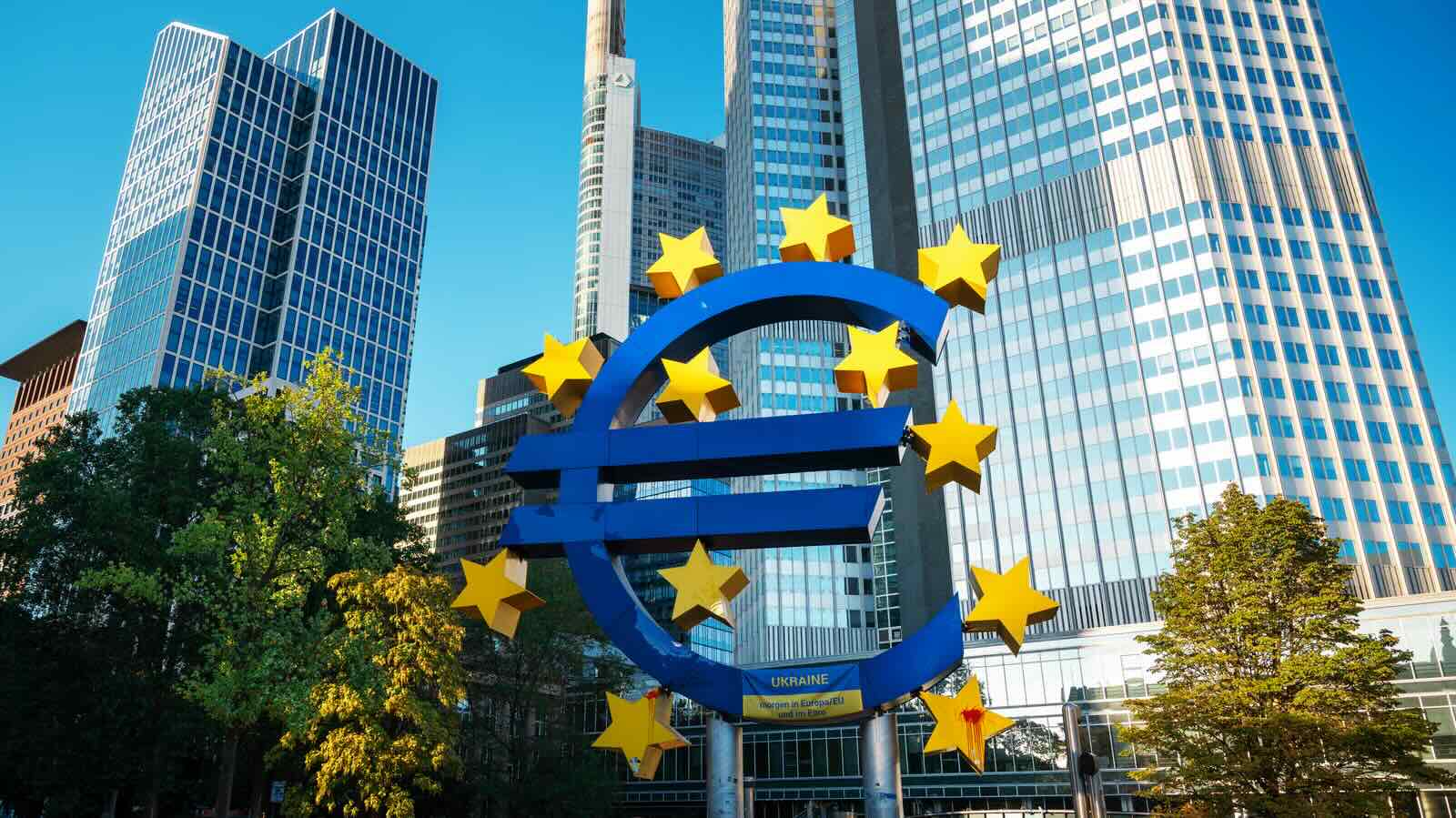
The European Central Bank is preparing for another closely watched interest-rate decision on Thursday, 29 October, as accelerating inflation and volatile energy prices complicate efforts to stabilise the eurozone economy.
Annual inflation reached 3.8 per cent in September, up from 3.2 per cent in August, placing price growth substantially above the ECB’s two per cent medium-term target.
The increase has renewed concerns among businesses and households that borrowing costs could remain elevated for longer than previously anticipated.
The ECB’s Governing Council will meet on 28–29 October, with its monetary policy decision scheduled for 14:15 Central European Time on Thursday. A press conference will follow at 14:45.
The forthcoming decision follows September’s quarter-point increase in all three key interest rates, when the central bank responded to renewed inflationary pressures associated with the Middle East conflict.
Inflation creates a difficult policy choice
According to Eurostat’s final September figures, eurozone inflation rose to 3.8 per cent from 3.2 per cent a month earlier.
The increase was particularly pronounced in energy prices.
Eurostat’s preliminary breakdown indicated that annual energy inflation reached 18.8 per cent in September, compared with 14.3 per cent in August.
Services inflation also increased, reaching 3.2 per cent, while food, alcohol and tobacco prices rose more moderately.
The combination presents a challenge for monetary policy.
Central banks normally raise borrowing costs to reduce demand when inflation becomes excessive. However, interest-rate increases cannot directly expand the supply of oil, gas or other commodities affected by international conflicts.
The ECB must therefore determine how much of the current inflationary pressure is likely to persist and whether higher energy costs will influence wages, services prices and business pricing decisions.
If energy inflation spreads into the wider economy, it could become more difficult to restore price stability.
Yet further monetary tightening could also weaken investment and economic activity.
September’s rate increase
At its previous monetary policy meeting on 10 September, the ECB increased its three key interest rates by 25 basis points.
The decision brought the deposit facility rate to 2.50 per cent, the main refinancing rate to 2.65 per cent and the marginal lending facility rate to 2.90 per cent, effective from 16 September.
The Governing Council cited the inflationary consequences of the Middle East conflict and the need to ensure that price growth returns towards its target.
Its September projections anticipated average inflation of three per cent in 2026, declining to 2.5 per cent in 2027 and 2.1 per cent in 2028.
The central bank also forecast eurozone economic growth of 0.9 per cent this year, followed by 1.4 per cent in 2027 and 1.5 per cent in 2028.
These forecasts suggest that policymakers expect inflation to moderate over time, but they also illustrate the narrow margin available for avoiding a prolonged period of weak growth.
The Governing Council has not committed itself to a predetermined interest-rate path.
Why businesses are watching closely
Interest-rate decisions affect companies through several channels.
Businesses financing equipment, property or expansion through bank loans may face higher borrowing costs when policy rates increase.
The effect is particularly important for smaller and medium-sized enterprises, which commonly depend on bank finance rather than corporate bond markets.
Higher financing costs can cause companies to delay investments or reassess projects that were financially attractive when borrowing was cheaper.
The ECB’s decisions also influence household finances, potentially affecting mortgage rates, consumer credit and demand for products and services.
However, changes in the central bank’s policy rates do not translate immediately or uniformly into commercial borrowing costs.
The impact depends on loan structures, competition between banks, market expectations and the terms of existing financing agreements.
For businesses, uncertainty over future interest rates can be almost as important as the current level.
Companies planning major investments need to estimate financing costs over several years, particularly when projects involve infrastructure, manufacturing or energy-intensive activities.
Energy prices remain central
The ECB’s October decision will take place against continuing uncertainty in international energy markets.
The consequences of the Middle East conflict have affected oil and gas prices, increasing costs for European businesses already facing pressure from international competition.
Energy-intensive industries are particularly exposed because electricity and fuel are essential operating expenses.
As QuestComms recently reported, accelerating eurozone inflation has become a significant concern for industrial producers and smaller businesses.
Higher energy costs can also increase transport and manufacturing expenses, affecting prices across supply chains.
This creates the possibility that an initially external energy shock could influence inflation well beyond the energy sector.
The ECB must assess that risk while avoiding unnecessary pressure on economic growth.
A delicate balance for European investment
The interest-rate decision is also relevant to the EU’s broader ambitions to increase investment in strategic industries.
European institutions are promoting investment in energy infrastructure, advanced technologies and critical supply chains as part of efforts to improve economic competitiveness.
These programmes require substantial private-sector financing.
As QuestComms examined in its recent report on EU securitisation reforms, European policymakers are attempting to expand the availability of credit and investment capital.
Monetary conditions will influence how readily businesses can use these opportunities.
There is no certainty that the ECB will increase interest rates again on 29 October. Policymakers could decide to maintain existing rates while assessing the effects of September’s tightening.
Alternatively, evidence of persistent inflation could strengthen arguments for further action.
The Governing Council’s assessment of underlying inflation, economic growth and the transmission of monetary policy will therefore be as important as the decision itself.
For European businesses, the immediate question is whether borrowing costs are approaching a stable level or whether another period of monetary tightening lies ahead.
The answer will influence investment decisions, financial planning and confidence across the eurozone during the final months of 2026.