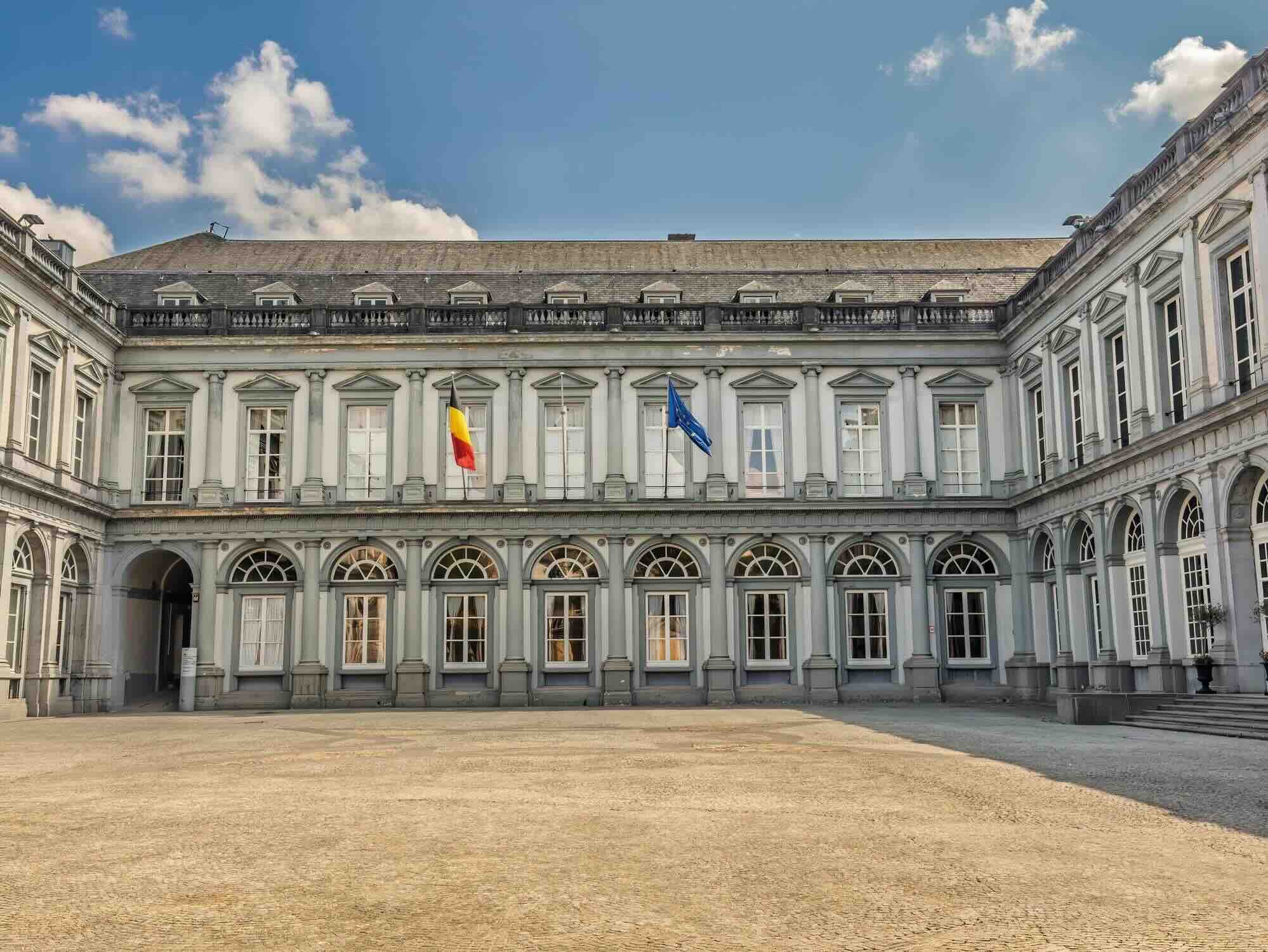
European business leaders, policymakers and representatives of EU institutions will gather at Brussels’ Egmont Palace on 17–18 November 2026 for the European Business Summit, with competitiveness and strategic independence at the centre of discussions.
The conference, organised by European Business Summits under the theme For Europe’s Next Era of Strategic Independence, comes amid concern about Europe’s industrial performance, energy costs, investment environment and exposure to international supply-chain disruptions.
According to the organisers’ published programme, the event will examine how European companies and institutions can strengthen economic resilience while maintaining the conditions necessary for investment, innovation and international competitiveness.
The discussion reflects an important shift in European economic policy. Strategic independence is no longer viewed exclusively through the lenses of defence or foreign affairs. It has become closely connected to industrial capacity, access to finance, energy infrastructure and the ability of European businesses to compete in global markets.
A changing definition of European economic security
Europe’s industrial model has long relied on international trade, integrated production networks and access to imported resources. Those relationships have generated considerable economic benefits but have also exposed vulnerabilities when geopolitical tensions disrupt established supply chains.
Russia’s war against Ukraine, pressure on energy markets and growing competition over advanced technologies have demonstrated the economic consequences of strategic dependencies.
For European policymakers, the difficulty lies in strengthening resilience without allowing economic security measures to become a justification for unnecessary protectionism or excessive market intervention.
The summit’s agenda therefore places particular emphasis on the relationship between investment and strategic independence. The organisers describe a programme centred on stronger markets, modern infrastructure, secure supply chains, competitive energy systems and digital capacity.
Achieving these objectives requires substantial public and private investment. Equally important will be the regulatory and financial conditions that determine where companies choose to invest.
Critical raw materials and industrial competitiveness
Access to strategically important materials is expected to feature prominently in the discussions.
The European economy depends on imported minerals and processed materials used in batteries, electricity networks, renewable energy technologies, semiconductors, advanced manufacturing and defence equipment.
The summit programme includes discussions examining the security of Europe’s critical inputs, with attention to raw materials, supply chains, recycling and investment.
Recent EU initiatives illustrate the importance attached to this issue. The European Commission has been seeking to expand European mining, processing and recycling capacity, including through the selection of 46 strategic critical raw materials projects.
The question for industry is whether such initiatives can deliver commercially viable production within timelines compatible with Europe’s industrial requirements. Even where resources exist within Europe, high operating costs, complex permitting procedures and investment risks can obstruct their development.
Circular-economy technologies and recycling may reduce some dependencies, but large-scale industrial investment will still be needed to strengthen supply-chain security.
Energy costs and the green transition
Energy policy represents another fundamental element of European competitiveness. Industrial producers face pressure to decarbonise while competing with international manufacturers operating under different energy-price structures and regulatory conditions.
The summit programme includes discussion of Europe’s simultaneous environmental and economic constraints, addressing the relationship between resilience, emissions reduction and competitiveness.
The challenge is particularly acute for energy-intensive industries, where electricity and gas prices can determine whether major investment projects remain economically viable.
Europe must also finance the expansion of electricity networks, clean generation capacity and industrial infrastructure. The consequences extend beyond established manufacturers to technology companies, data centres and businesses developing advanced digital services.
As QuestComms.eu has examined in its coverage of EU carbon-market reform, changes to emissions trading are part of a broader debate about balancing climate-policy objectives with predictable investment conditions.
The success of Europe’s industrial transition will depend not simply on setting environmental targets but on making the required investment commercially sustainable.
Financing Europe’s strategic ambitions
A central question for the summit will be where the necessary capital is to come from. European companies continue to face financing conditions that can differ substantially between member states, while the fragmentation of capital markets complicates efforts to mobilise investment on a continental scale.
Investment in digital infrastructure, industrial capacity, energy networks and advanced technologies frequently requires long-term financing and regulatory certainty.
EU initiatives intended to improve the flow of capital into European businesses are therefore directly relevant. Recent developments in European securitisation reform illustrate attempts to increase financing capacity while maintaining appropriate safeguards.
Yet reforms to financial regulation alone cannot guarantee stronger investment. Businesses also need predictable energy costs, skilled workers, functioning infrastructure and regulatory arrangements that support cross-border expansion.
The summit will offer an opportunity for representatives of European institutions and the private sector to examine how these different policy areas interact.
European institutions and business leaders
The organisers have listed senior policymakers and business representatives among those invited to participate, including Executive Vice-President Stéphane Séjourné, responsible for prosperity and industrial strategy, and Executive Vice-President Teresa Ribera, whose portfolio covers the clean, just and competitive transition.
Commissioners and senior officials associated with trade, financial services, energy and industrial policy also feature on the organisers’ published list of invited speakers. Inclusion on that list does not necessarily constitute confirmation of attendance.
The breadth of the programme reflects the increasingly interconnected nature of European economic policymaking. Industrial competitiveness can no longer be treated separately from energy policy, trade relationships, access to finance or technological development.
What to watch in Brussels
The European Business Summit will not itself determine EU legislation. Its importance lies in providing a forum where institutional priorities can be tested against the concerns of businesses responsible for investment and employment.
For European companies, the most significant outcome would be greater clarity on how Brussels intends to reconcile strategic independence with the preservation of an open and competitive economy.
The central test is whether Europe can move beyond ambitious political declarations towards policies that mobilise capital, reduce unnecessary obstacles and strengthen industrial capacity.
European Business Summit 2026 takes place on 17–18 November at Egmont Palace, Brussels. Details of the agenda, participation and registration are available on the official summit website.
As Europe confronts a more demanding geopolitical and economic environment, the challenge facing policymakers is straightforward: strategic independence will ultimately depend on Europe’s ability to remain an attractive place to invest, produce and innovate.