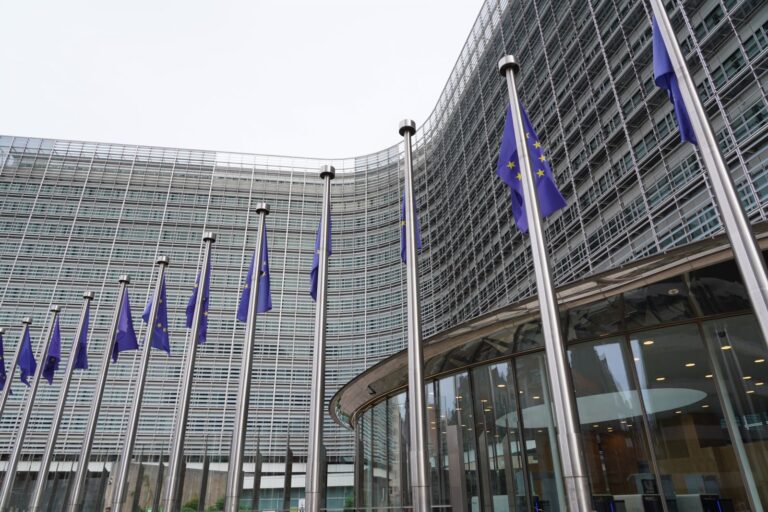

The European Union is attempting to reduce the complexity of its digital legislation without weakening data protection or cybersecurity. A new Council position proposes changes to privacy rules, cookie consent and incident reporting, but businesses should distinguish between political agreement and obligations that have actually changed.
European businesses have spent much of the past decade adapting to an expanding framework of digital regulation.
The General Data Protection Regulation, cybersecurity legislation, data-sharing requirements and sector-specific rules have created an increasingly complex compliance environment.
For multinational companies, the challenge is not simply understanding individual regulations.
It is managing the interaction between them.
A cybersecurity incident may trigger obligations under several legal frameworks. A digital service may face overlapping requirements concerning privacy, consumer protection and data access.
Compliance teams must interpret these obligations while technology departments implement the necessary technical controls.
On 21 October 2026, the Council of the European Union agreed its position on proposals intended to simplify parts of this framework.
The Council’s Digital Omnibus announcement outlines proposed changes to data protection, online tracking, data-sharing legislation and cybersecurity reporting.
The objective is to reduce administrative burdens while maintaining established protections.
However, the agreement is a negotiating position, not a completed legislative reform.
The European Parliament must establish its own position before negotiations can determine the final text.
Businesses should therefore prepare for possible changes without assuming that existing obligations have already disappeared.
Simplification Does Not Mean Deregulation
The political argument behind the initiative is straightforward.
European companies compete internationally with businesses operating under different regulatory conditions.
Complex compliance requirements can impose disproportionate costs on smaller organisations, particularly those without dedicated legal and regulatory departments.
Administrative complexity can also discourage investment in new technologies.
Yet the economic case for simplification does not automatically justify reducing substantive protections.
Privacy and cybersecurity rules perform important functions.
They establish expectations concerning the handling of personal information, reduce risks associated with digital services and provide a foundation for trust in cross-border transactions.
The Council’s approach seeks to simplify procedures rather than abandon these objectives.
Whether the final legislation achieves that balance will depend on the detail of the provisions adopted.
For businesses, the relevant question is not how many regulations are amended.
It is whether compliance becomes more predictable and less expensive without creating new uncertainty.
GDPR: Greater Clarity, but Not a Free Pass
The Council supports targeted changes to the GDPR, including clarification of rules concerning pseudonymisation and the identification of individuals.
Pseudonymisation involves processing personal data so that information cannot be attributed to a particular person without additional information held separately.
It is widely used in analytics, research and information-security systems.
However, organisations can encounter uncertainty over whether particular datasets remain personal data and what safeguards are required.
Clearer legal provisions could help businesses design systems with greater confidence.
The Council also supports simplifying certain information obligations and procedures for handling unfounded or excessive requests.
Another proposed change concerns the deadline for notifying personal-data breaches.
These measures could reduce administrative burdens, particularly for organisations handling substantial volumes of information.
But they would not eliminate the fundamental obligations to process personal data lawfully, maintain appropriate security and respect individuals’ rights.
Businesses should be cautious about interpreting the reform as permission to collect more information or relax internal controls.
The final legislation may also differ from the Council’s negotiating position.
For now, existing GDPR requirements remain applicable.
Cookie Consent and the Future of Website Analytics
One of the most commercially relevant elements concerns cookies and other online tracking technologies.
Website operators have long struggled to balance regulatory requirements with the practical demands of analytics, personalisation and digital advertising.
Consent banners have become a familiar feature of the European internet.
Yet their widespread use has also created frustration.
Visitors may encounter repeated requests to approve or reject tracking, sometimes across websites that use similar technologies.
The Council proposes clearer circumstances in which consent would not be required.
Examples include certain activities necessary to provide a service, protect a user’s device or perform audience measurement.
For publishers, marketing agencies and businesses operating commercial websites, these changes could be significant.
They might reduce the need for consent prompts in some low-risk situations and simplify the implementation of website analytics.
However, the distinction between audience measurement and advertising-related tracking will remain important.
Not every analytics or marketing technology would automatically qualify for an exemption.
Companies will need to examine how individual tools collect, process and share information.
The final wording of the legislation will determine the practical boundaries.
Businesses should therefore avoid redesigning their consent systems solely on the assumption that the proposed exemptions will be adopted unchanged.
Cybersecurity Reporting: Reducing Duplication
Cybersecurity reporting represents another area where overlapping legislation can create difficulties.
A serious incident may affect personal data, operational systems and the provision of regulated services.
Depending on the organisation and the nature of the event, several reporting obligations may apply.
These requirements can involve different authorities, deadlines and information formats.
The Council’s proposal introduces national entry points intended to facilitate reporting under different EU legal frameworks.
It also envisages an EU-level information point and more consistent procedures for cross-border incidents.
The aim is to reduce duplication while preserving the ability of competent authorities to respond to security events.
For businesses, such arrangements could simplify incident-management procedures.
Instead of maintaining entirely separate reporting processes for each regulatory framework, organisations might be able to coordinate notifications more efficiently.
Nevertheless, the operational benefits will depend on implementation.
A single reporting interface does not necessarily eliminate the need to determine which legal obligations apply.
Companies will still require reliable incident classification, internal escalation procedures and accurate records.
Cybersecurity governance cannot be outsourced to a reporting portal.
What Businesses Should Do Now
The proposed reforms create an opportunity to review existing compliance arrangements.
Organisations can begin by identifying areas where overlapping obligations produce unnecessary duplication.
Privacy teams, cybersecurity specialists and legal departments should examine how incidents are currently reported and whether information is being collected repeatedly for different purposes.
Website operators can review their cookie inventories and distinguish essential technologies, audience measurement tools and advertising trackers.
Businesses developing AI applications should also consider how data protection requirements interact with the EU’s separate AI regulatory framework.
These exercises are valuable even if the legislative proposals change.
They can reveal outdated procedures, inconsistent documentation and unnecessary technical complexity.
However, compliance decisions should remain grounded in legislation currently in force.
It would be premature to stop obtaining consent, extend breach-notification deadlines or abandon existing reporting obligations before the relevant legal changes take effect.
Competitiveness Depends on Implementation
The Digital Omnibus initiative reflects a broader reassessment of Europe’s approach to technology regulation.
The EU has established an extensive framework intended to protect consumers, promote fair competition and strengthen digital security.
It must now demonstrate that these objectives can coexist with innovation and business growth.
Simplification may help, particularly where companies currently spend resources navigating procedural complexity rather than improving services or security.
But the commercial benefits will depend on the quality of the final rules and their implementation across member states.
A reform that replaces one set of ambiguities with another could increase costs rather than reduce them.
For European businesses, the most useful outcome would be a digital regulatory environment in which responsibilities are clear, compliance processes are proportionate and cross-border operations are genuinely easier.
The Council’s October agreement is a step towards that objective.
It is not yet evidence that the objective has been achieved.