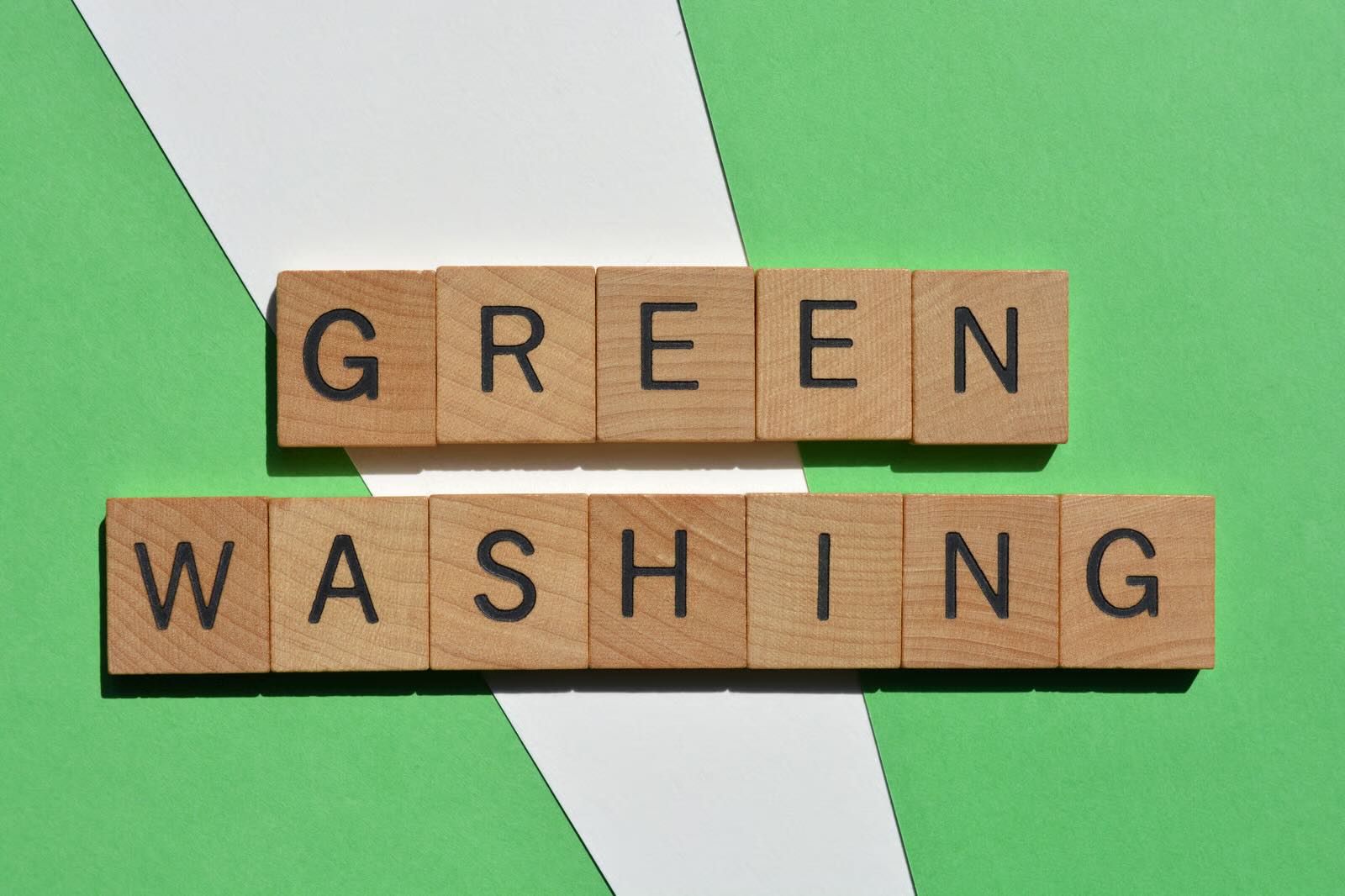
New EU restrictions on environmental claims are changing how companies advertise products, present sustainability credentials and communicate with consumers. The rules place greater emphasis on verifiable evidence and could require substantial changes to established marketing practices.
European businesses are facing a new regulatory environment for environmental advertising following the application of EU rules designed to prevent misleading sustainability claims, introducing stricter requirements for product descriptions, marketing campaigns and corporate communications.
The measures, introduced through Directive (EU) 2024/825, began applying on 27 September 2026. They amend existing consumer protection legislation to restrict environmental claims that cannot be substantiated and sustainability labels that fail to meet specified standards.
The legislation affects companies operating across the European single market, particularly those in consumer goods, retail, fashion, food, cosmetics and household products, where environmental attributes have become a prominent feature of marketing.
For businesses, the changes extend beyond the wording of advertisements. They also affect packaging, product development, supplier relationships and the evidence used to support public statements.
The end of vague environmental promises
Under the new framework, companies face restrictions on broad expressions such as “eco-friendly”, “green” and “environmentally friendly” unless they can demonstrate recognised excellent environmental performance relevant to the claim.
The legislation also prohibits presenting an environmental benefit relating to one component or activity as though it applies to an entire product or business.
For example, a manufacturer cannot automatically characterise an entire product as environmentally sustainable because its packaging contains recycled material.
The distinction is significant for marketing departments accustomed to communicating complex environmental information through short slogans.
Instead of relying on general descriptions, businesses increasingly need to explain the specific characteristics underlying their environmental claims.
A company might therefore describe the proportion of recycled materials in its packaging or provide evidence concerning energy consumption during manufacturing.
Such statements must nevertheless comply with broader rules against misleading commercial practices.
Restrictions on carbon neutrality claims
Another important change concerns the marketing of products as climate-neutral or carbon-neutral.
The directive prohibits claims that a product has a neutral, reduced or positive greenhouse-gas impact when those claims are based on offsetting emissions outside the product’s value chain.
The restrictions do not prohibit companies from investing in carbon-credit projects or explaining their environmental initiatives.
However, businesses cannot use such investments to present a product as having no climate impact when that conclusion depends on external offsetting rather than the product’s actual environmental performance.
This creates particular challenges for companies that have incorporated carbon-neutrality statements into branding, packaging or promotional campaigns.
Advertising strategies based on such claims may require reassessment, including a review of the underlying evidence and how it is communicated.
Sustainability labels face additional scrutiny
The directive also restricts sustainability labels that are neither based on qualifying certification schemes nor established by public authorities.
Consequently, companies operating their own environmental labelling systems must examine whether those schemes meet the regulatory requirements.
The implications extend to retailers and distributors that display suppliers’ sustainability claims without necessarily controlling how those claims were developed.
Businesses may need to request additional documentation from manufacturers and reassess the environmental information presented on websites, product listings and promotional materials.
This creates a closer relationship between marketing, procurement and regulatory compliance.
What happens to existing packaging?
One of the practical difficulties concerns products manufactured or distributed before the rules began applying.
In June 2026, the European Commission and national consumer protection authorities agreed a common approach to existing stock.
Authorities recognised that immediate replacement of packaging or withdrawal of products could create disproportionate costs and additional environmental harm.
Their guidance allows enforcement bodies to consider practical difficulties individually, including production cycles, warehouse inventories and supply-chain arrangements.
However, this does not create a general exemption for products already on the market.
Companies are expected to take reasonable steps towards compliance, including updating online descriptions, correcting advertising and adapting future packaging.
Corporate communications become a compliance issue
For communications professionals, the legislation raises questions about the relationship between corporate sustainability strategies and public representations of environmental performance.
Annual sustainability reports, advertising campaigns, product claims and executive statements may rely on different datasets or methodologies.
Inconsistencies between those communications can create legal and reputational exposure.
Companies therefore have an incentive to establish clearer approval procedures, ensuring environmental claims are reviewed against available evidence before publication.
The new rules also create a distinction between communicating environmental ambition and making specific claims about products.
A company may describe its plans to reduce emissions, but such statements should not be confused with evidence that an individual product already possesses particular environmental characteristics.
As national authorities implement and enforce the restrictions, businesses will need to monitor how the rules are interpreted across different markets.
The immediate consequence is that environmental marketing is becoming more closely connected to regulatory compliance, product information and independently verifiable performance.
For European brands, the credibility of sustainability communications will increasingly depend on what can be demonstrated rather than what can be suggested through advertising.