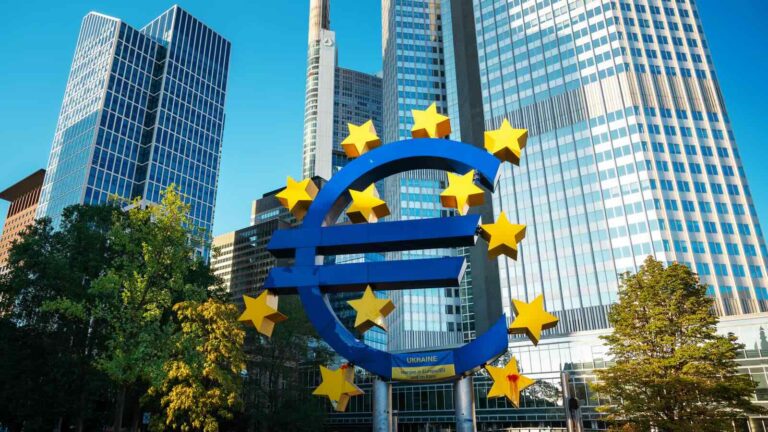

Inflation in the euro area accelerated sharply in September, driven largely by higher energy prices, increasing pressure on companies already facing expensive credit, uncertain demand and rising operating costs.
Annual inflation in the eurozone reached 3.8 per cent in September 2026, up from 3.2 per cent in August, as higher energy prices continued to increase costs for businesses and households across Europe.
The final figures published by Eurostat on 16 October confirmed a substantial acceleration from the 2.2 per cent annual rate recorded in September 2025.
Inflation across the European Union as a whole also reached 3.8 per cent. According to Eurostat, annual inflation increased in 23 member states compared with August, remained unchanged in three and declined in only one.
The figures present a challenge for companies attempting to plan investment, negotiate supply contracts and determine pricing at a time when the European Central Bank must weigh persistent inflation against the risk of weaker economic growth.
Energy remains the main source of pressure
Energy accounted for 1.71 percentage points of annual eurozone inflation in September, while services contributed another 1.52 percentage points. Non-energy industrial goods and food, alcohol and tobacco made smaller positive contributions.
Energy’s annual inflation rate reached 18.8 per cent in September, compared with 14.3 per cent in August, according to Eurostat’s component data.
The increase reflects renewed pressure on international energy markets, including disruptions associated with the conflict in the Middle East and higher prices for petroleum products and natural gas.
In its September monetary policy discussions, published on 8 October, the European Central Bank recorded concerns about refining capacity, elevated diesel prices, European gas storage levels and the possibility of continuing price increases.
These developments affect businesses through several channels.
Manufacturers face higher costs for production processes that depend on electricity, natural gas or industrial heat. Transport companies encounter higher fuel bills, while retailers can face additional distribution costs as suppliers pass on increases.
Companies operating with fixed-price customer contracts may be unable to recover additional expenses immediately, putting pressure on margins.
Significant differences between countries
The inflation picture differs considerably across Europe.
Eurostat recorded annual rates of 6.5 per cent in Romania, 6.1 per cent in Lithuania and 5.6 per cent in Bulgaria. Sweden registered 1.0 per cent, while Hungary and Denmark recorded 2.1 per cent.
Belgium’s annual rate reached 4.5 per cent, above the eurozone average, while Germany registered 3.3 per cent and France 3.4 per cent.
For companies operating in several European markets, those differences complicate decisions about staffing, wages, commercial pricing and procurement.
Businesses exposed to energy-intensive manufacturing face different pressures from software companies or professional-services firms, where labour costs typically account for a larger proportion of expenditure.
A common inflation rate therefore conceals substantial differences in the financial conditions confronting individual sectors.
Monetary policy and the cost of finance
The European Central Bank faces a particularly difficult policy environment because the latest inflation increase is being driven substantially by energy supply conditions rather than unusually strong domestic demand.
Higher interest rates can restrain borrowing and spending, reducing some inflationary pressures. They cannot directly increase international oil supplies, repair damaged energy infrastructure or remove transport bottlenecks.
In a September assessment of inflation drivers, ECB economists distinguished the current energy-led shock from the broader combination of supply shortages, demand and fiscal support that characterised the inflation surge earlier in the decade.
The distinction has practical consequences for businesses.
Further increases in financing costs would make equipment purchases, commercial property investment and corporate expansion more expensive. Smaller businesses dependent on bank lending could be particularly exposed.
Yet allowing energy-driven price increases to spread into wages and other prices would create a separate risk of more persistent inflation.
Implications for the European economy
The ECB’s September projections envisaged average eurozone inflation of 3.0 per cent in 2026, 2.5 per cent in 2027 and 2.1 per cent in 2028. Those projections depend on assumptions about energy prices and wider economic conditions.
For companies, the priority is increasingly the management of uncertain operating costs rather than simply responding to the latest inflation figure.
Businesses may need to reassess energy procurement arrangements, examine the financial exposure of long-term contracts and reconsider investment plans where profitability depends on stable electricity or transport costs.
The September data show how developments outside Europe can quickly affect production and consumer prices within the single market.
Whether those increases become persistent will depend on future energy prices, their transmission into wages and services, and the monetary policy decisions taken in response.