
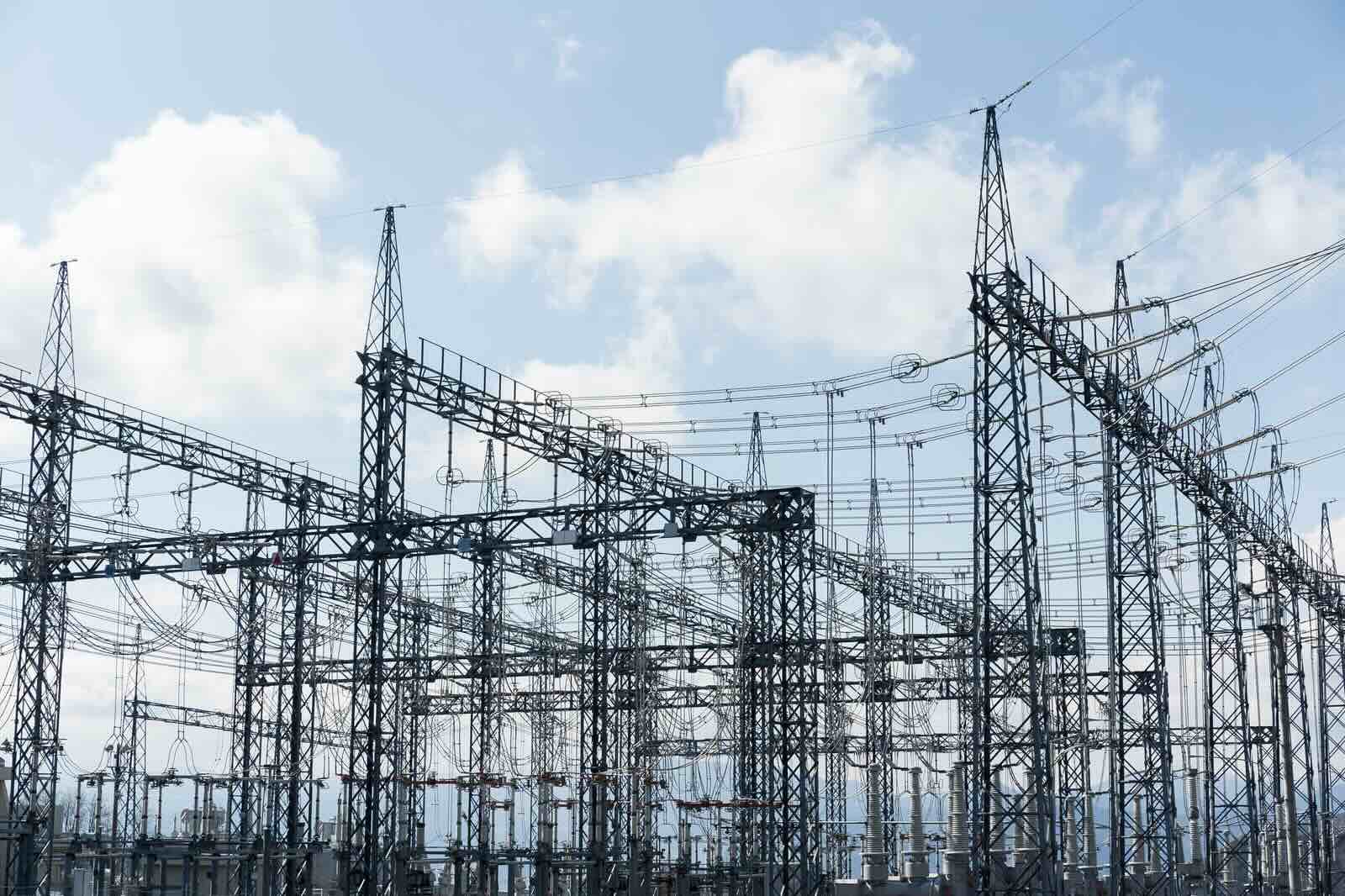
National Grid has agreed to acquire land on Teesside for a major electricity substation intended to support one of Europe’s largest proposed artificial intelligence data-centre developments. The project illustrates how access to electricity, rather than computing equipment alone, is becoming a decisive factor in the development of AI infrastructure.
National Grid Electricity Transmission has reached an agreement to purchase more than 70 acres of land at Dorman Point, within the Teesworks industrial site in north-east England.
The proposed substation would supply a neighbouring data-centre complex that could become the largest in Europe if developed at the anticipated scale.
According to reporting published on 1 November, the site has attracted interest from major American technology companies and developers of advanced AI systems.
The identity of the eventual data-centre operator has not been announced, and the development remains subject to investment, infrastructure and planning decisions.
Nevertheless, the land agreement provides an indication of the scale of electricity infrastructure required to support the next generation of computing facilities.
A Data Centre That Requires Industrial-Scale Power
The proposed Tees Dock substation forms part of National Grid’s wider electricity transmission investment programme.
A planning application submitted to Redcar and Cleveland Borough Council in September concerns a new 400-kilovolt transmission substation at the site.
The application remains under consideration.
National Grid’s proposals envisage more than one gigawatt of electricity import and export capacity, with infrastructure supporting a private electricity network and a proposed battery storage system.
Tees Valley Mayor Ben Houchen has suggested that the wider site could eventually accommodate up to 3.2 gigawatts of capacity.
These figures describe different aspects of the proposed infrastructure and should not be interpreted as current electricity consumption.
The eventual requirements will depend on the number of data centres constructed, the equipment installed and their operational characteristics.
For comparison, one gigawatt represents the electrical capacity of a substantial conventional generating unit.
The project therefore highlights the considerable engineering requirements associated with large AI computing clusters.
Electricity Becomes a Constraint on AI Investment
Artificial intelligence development has increased demand for powerful computing equipment, including specialised processors used for training and operating advanced models.
These systems consume considerable electricity and require additional power for cooling, networking and supporting infrastructure.
The International Energy Agency’s latest assessment projects that global data-centre electricity consumption will rise from approximately 485 terawatt-hours in 2025 to 950 terawatt-hours by 2030.
Electricity consumption specifically associated with AI-focused data centres is expected to grow faster than the sector overall.
However, securing enough electricity is only one requirement.
Developers also need appropriate connections, transformers, substations and transmission capacity.
Large projects can face delays when the necessary grid infrastructure is unavailable or when other users are competing for limited connection capacity.
For investors, these constraints can influence site selection, project financing and the timing of construction.
A data-centre development may secure substantial investment but remain unable to operate at its intended capacity until the supporting electrical infrastructure is completed.
Europe’s Electricity Networks Face Similar Pressures
The Teesside project reflects a problem extending across Europe.
Governments are encouraging investment in AI computing capacity while simultaneously expanding renewable generation, electrifying industry and modernising transport.
Each of these developments places additional requirements on electricity networks.
In some locations, the challenge is insufficient generation. Elsewhere, adequate electricity may exist but the transmission infrastructure cannot deliver it to a particular site.
The European Commission has acknowledged the relationship between digital development and electricity infrastructure.
As QuestComms recently reported, Brussels is examining how AI could improve electricity-grid management while addressing the additional consumption created by data centres.
This creates a dual technical challenge.
AI applications may improve demand forecasting, maintenance planning and network efficiency, but the computing systems supporting those applications simultaneously increase electricity requirements.
Energy planning and digital infrastructure development can therefore no longer be treated as entirely separate investment decisions.
Data Sovereignty Goes Beyond Physical Location
The Teesside proposal also reflects the British government’s interest in developing domestic AI infrastructure.
Locating data centres within national territory may offer advantages concerning security, regulatory oversight and the handling of sensitive information.
However, the geographical location of a facility does not automatically establish control over the data or technology it contains.
Ownership, cloud-service contracts, encryption arrangements, administrative access and the legal jurisdiction of operating companies all influence data governance.
A British data centre operated by an overseas company may still depend on foreign technology, personnel and commercial arrangements.
European organisations considering sovereign cloud or AI infrastructure must therefore examine operational and contractual control alongside physical location.
Implications for Businesses and Investors
The Teesside development is still a proposal rather than a completed data-centre complex.
Its construction will depend on obtaining the necessary approvals, completing electrical infrastructure and securing sufficient commercial demand.
Nevertheless, it demonstrates how the economics of AI infrastructure are changing.
Businesses planning major computing investments increasingly need to evaluate electricity availability, connection schedules, long-term energy costs and operational resilience at an early stage.
They must also consider the financial implications of cooling, backup power, security and environmental requirements.
For European governments, the issue is whether network investment can keep pace with digital industrial ambitions without placing disproportionate costs on other electricity users.
The Teesside project may become an important AI computing facility. Its immediate relevance, however, is the increasingly close relationship between technological competitiveness and the physical capacity of Europe’s electricity networks.