
The European Innovation Council has selected 43 research projects involving 218 organisations across 30 countries, supporting technologies ranging from quantum computing and advanced manufacturing to medical treatments and climate-resilient agriculture.
The European Innovation Council has selected 43 research projects for grant funding of up to €4 million each, supporting early-stage technologies with potential applications in healthcare, computing, manufacturing and environmental management.
The projects were announced on 14 October under the EIC Pathfinder Open 2026 programme, part of the European Union’s Horizon Europe research and innovation framework.
They involve 218 organisations from 30 countries, including 24 EU member states, and bring together universities, research institutions and private businesses.
The programme is intended to support research at a stage when technologies may have substantial commercial potential but remain too uncertain for conventional investment.
Funding is conditional on the successful conclusion of grant agreements, and the selected projects should not yet be regarded as commercially proven products.
Bridging research and commercial development
Europe has extensive university research capacity and established scientific institutions, but transforming early-stage discoveries into competitive companies and industrial technologies remains a persistent challenge.
Projects often require years of laboratory development, testing, regulatory assessment and engineering before becoming commercially viable.
Private investors may be reluctant to finance research where the technical risks are high and potential returns remain distant.
The EIC Pathfinder programme addresses that stage by supporting research into technologies that could eventually establish new markets or transform existing industries.
Unlike programmes primarily intended to expand established companies, Pathfinder concentrates on investigating ideas before their practical feasibility has been fully demonstrated.
For participating businesses, the potential benefits include access to specialised scientific knowledge, collaboration with universities and opportunities to develop intellectual property.
However, the route from initial research to marketable products remains uncertain.
Quantum computing and manufacturing
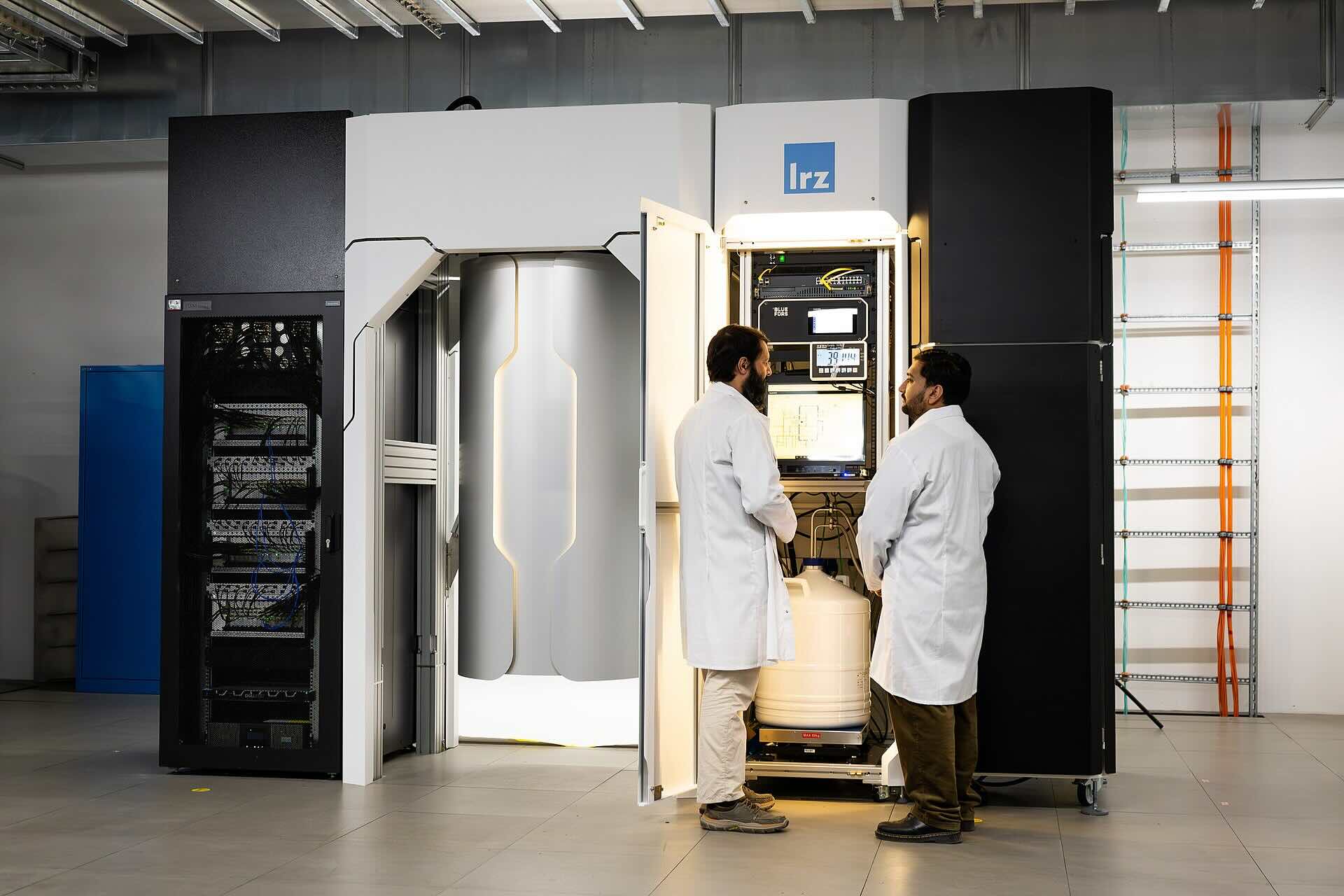
One selected project, NoBIQu, is investigating a new approach to quantum computing.
Quantum systems face substantial difficulties because errors can disrupt calculations, requiring complex correction mechanisms and additional hardware.
NoBIQu aims to combine superconducting quantum bits with more efficient error-correction methods to reduce the resources needed for reliable computing.
If successful, the research could contribute to future developments in large-scale fault-tolerant quantum systems.
The project remains at an experimental stage and does not establish that a commercially practical quantum computer has been developed.
Another project, DyHoLIT, focuses on advanced holographic lithography.
The research combines programmable optical technologies with mathematical algorithms to investigate ways of manufacturing extremely small and complex structures.
Potential applications include semiconductor production and the manufacture of intricate three-dimensional structures used in biomedical research.
These areas are commercially significant because modern electronics and precision manufacturing depend increasingly on the ability to produce components at very small scales.
However, moving from laboratory demonstrations to industrial equipment requires further engineering, reliability testing and cost assessment.
New medical technologies
The selected projects also include LUNGBOT, which is investigating a proposed method of delivering therapeutic molecules directly to lung tumours.
The concept involves engineered bacteria administered through inhalation, with the aim of reaching tumours and producing therapeutic substances locally.
Researchers hope that a targeted approach could eventually reduce some limitations associated with delivering medicines throughout the body.
The concept is experimental and should not be interpreted as an established treatment for lung cancer.
Medical developments of this kind require extensive safety assessments, preclinical studies and, where appropriate, clinical trials before any commercial application.
Nevertheless, the project illustrates the range of technologies included in a programme extending well beyond conventional digital innovation.
Climate-resilient agriculture
A separate project, DEW2ROOT, is exploring a wood-based material designed to capture moisture from the atmosphere and transport it towards plant roots.
Its developers are investigating a one-directional water-transfer mechanism that could help young plants survive dry conditions without conventional irrigation.
Potential applications include agriculture, forestry and the restoration of ecosystems affected by water shortages.
The technology’s eventual usefulness will depend on its performance under different climatic conditions, material durability and the cost of deployment.
For agricultural businesses, those practical factors are likely to determine whether an experimental concept can become a commercially attractive product.
Universities and companies working together
The 43 projects involve 266 organisational participations across their research consortia.
According to the European Innovation Council, higher and secondary education institutions account for 44 per cent of participations, research organisations for 28 per cent and private companies for 25 per cent.
Small and medium-sized enterprises participate in 34 of the selected projects.
This composition reflects the collaborative model through which European research funding frequently operates.
Universities provide specialist research facilities and scientific expertise, while companies contribute engineering capabilities, potential market applications and experience with commercial development.
The challenge arises when projects need to move beyond grant-funded research and attract further investment for product development, manufacturing or regulatory approval.
The next stage of investment
The European Innovation Council provides several funding instruments covering different stages of innovation, including programmes aimed at technology validation and business development.
Successful Pathfinder research may therefore create opportunities for further support, although progression is neither automatic nor guaranteed.
The EIC has said that its next funding opportunities will open in November 2026.
The latest project selections demonstrate the breadth of research receiving EU support, from medical biotechnology to quantum systems and advanced industrial materials.
Their eventual economic contribution will depend on whether research results can be developed into reliable technologies, protected through appropriate intellectual-property arrangements and brought to market.
For European technology companies and investors, the 43 projects represent a pipeline of possible innovations rather than a portfolio of products ready for commercial deployment.