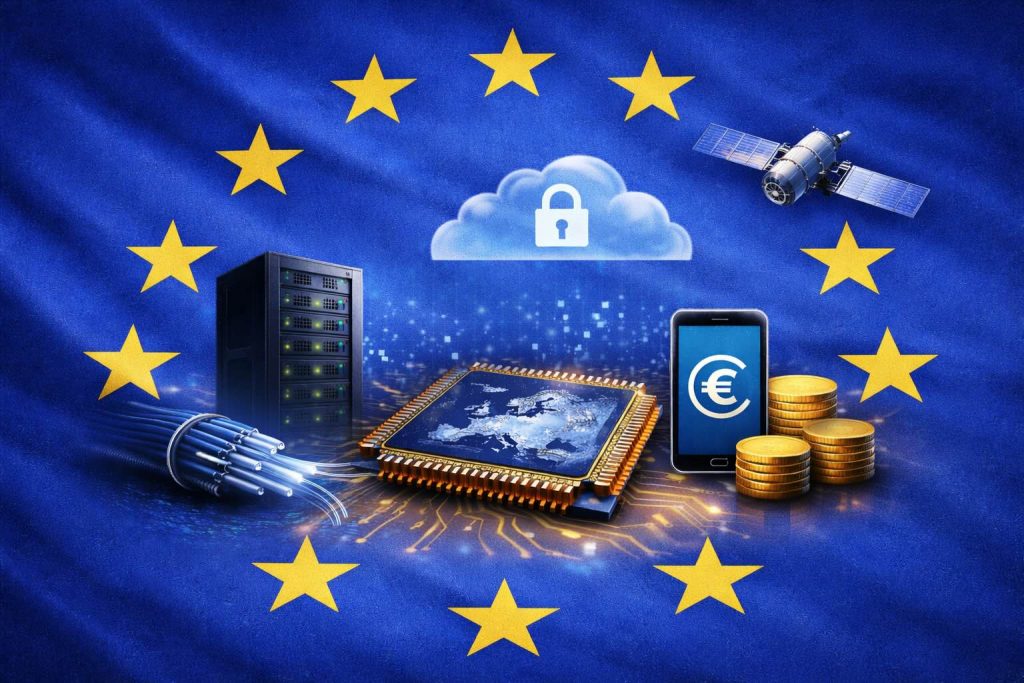
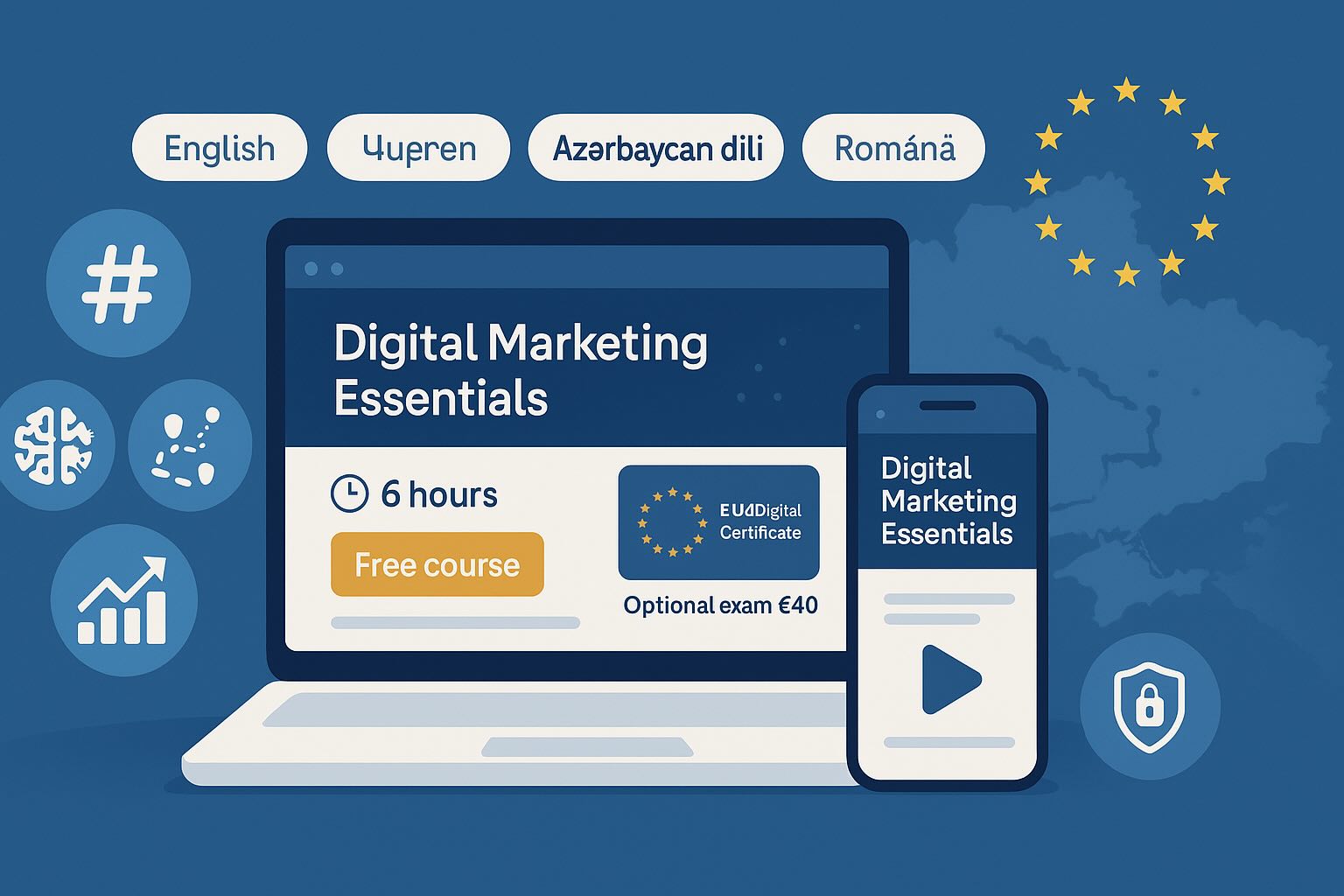
In a deft evolution of its educational outreach, the EU4Digital Academy has ushered in a significant expansion of its flagship “Digital Marketing Essentials” programme, now accessible in Armenian, Azerbaijani, Romanian and Ukrainian—alongside its original English launch. Unveiled on 4th September 2025, this initiative extends a rare opportunity: a typically premium digital marketing curriculum, delivered entirely free of charge to citizens of Eastern Partnership nations.
A Course Tailored for the Digital Terrain
Conceived in partnership with the Digital Marketing Institute (DMI)—the globally recognised authority in digital marketing education—the course seeks to address a precise and growing need. Aimed expressly at non-marketing professionals, the curriculum equips participants with essential literacy in digital tools and strategy, helping them acclimatise to a rapidly shifting online ecosystem.
Spanning a manageable six hours of self-paced learning, the modules delve into pressing themes: the influence of social media and artificial intelligence; the contours of the modern consumer’s journey; data-driven decision-making; the imperative of privacy and data protection; and the disciplined application of marketing strategy.
Certificate—and an Option for More
Every participant who completes the course receives a free certification from EU4Digital, a tangible token that bolsters professional credentials. For those wishing to go further, the prestigious DMI Essentials exam is also available, albeit at a modest fee of €40 (ex-VAT), through a convenient emailed purchase link.
Why Multilingual Access Matters
That the course has now been translated into key Eastern Partnership languages merits particular attention. It signals a commitment to more than mere educational export—it is an acknowledgment of linguistic dignity. Learners are invited to engage in their mother tongues, allowing nuances of understanding that English-only provision sometimes muffles.
This expansion comes not in isolation. Earlier, in March 2025, the course was first launched in English, with promises of regional language versions on the way from mid-April. The arrival of translations now brings that pledge to fulfilment—a timing that speaks to both logistical readiness and policy coherence.
Situated within a Broader EU Digital Strategy
The Digital Marketing Essentials initiative is one among several tailored digital learning opportunities curated by EU4Digital. Its e-Commerce in EU Marketplaces course has already engaged some 6,400 learners, while last spring’s Cybersecurity programme drew around 600.
A new module focused on the digitalisation of businesses is anticipated in the months ahead—suggesting a project that is both dynamic and attuned to the evolving priorities of the region.
Viewed collectively, these offerings chart a clear ambition: to nurture digital resilience, literacy, and commercial acumen across the six Eastern Partnership nations—Armenia, Azerbaijan, Belarus, Georgia, Moldova and Ukraine—that constitute the programme’s key constituency.
In Context: A Strategic Investment in the Region’s Future
This initiative arrives at a moment of profound transformation. In the face of geopolitical pressures, evolving economies and digital reconfigurations, the Eastern Partnership region is in the midst of a strategic realignment. By making high-quality digital marketing education freely accessible and linguistically inclusive, the EU embeds early investment in capacities that will underpin economic diversification and integration.
For SMEs, public sector workers, NGOs or civic activists—many of whom lack formal marketing training but nonetheless communicate, advocate and campaign in increasingly digital environments—the course offers a foundational toolkit.
Expert Reflections
Though the course is tailored for novices, its underpinning quality—from the DMI’s international repute to the polished atingi platform—should reassure stakeholders of its credibility. The fee for the optional DMI exam remains modest, particularly given the career-enhancing prospects it confers. Meanwhile, the multilingual rollout removes a barrier that too often steers potential learners toward more limited or un-contextualised options.
What Next?
Looking ahead, the forthcoming digitalisation-of-business course, once launched, may well serve as a complementary deep-dive, building on the conceptual awareness generated by the marketing essentials module. Yet a vital question remains: how will the Academy assess learning outcomes and measure broader impact? Quantitative enrolment figures tell part of the story, but qualitative feedback—case studies of businesses or initiatives transformed by these digital skills—would substantially enrich understanding.
Considering the EU’s broader strategic agenda in the region, integrating returns on such educational investments into economic development reporting could be a compelling next step.
Final Reflection
In translating and disseminating Digital Marketing Essentials across languages and borders, the EU4Digital Academy has done more than expand access. It has demonstrated a nuanced sensitivity—to language, to digital divides, to professional diversity. In a world where digital fluency often dictates opportunity, opening the classroom to Eastern Partnership nations in their own tongues is not just generous—it is one of the most precise, purposeful forms of diplomacy.
At a six-hour runtime, the course is lean but potent; as a gesture of educational solidarity, it is rich indeed.