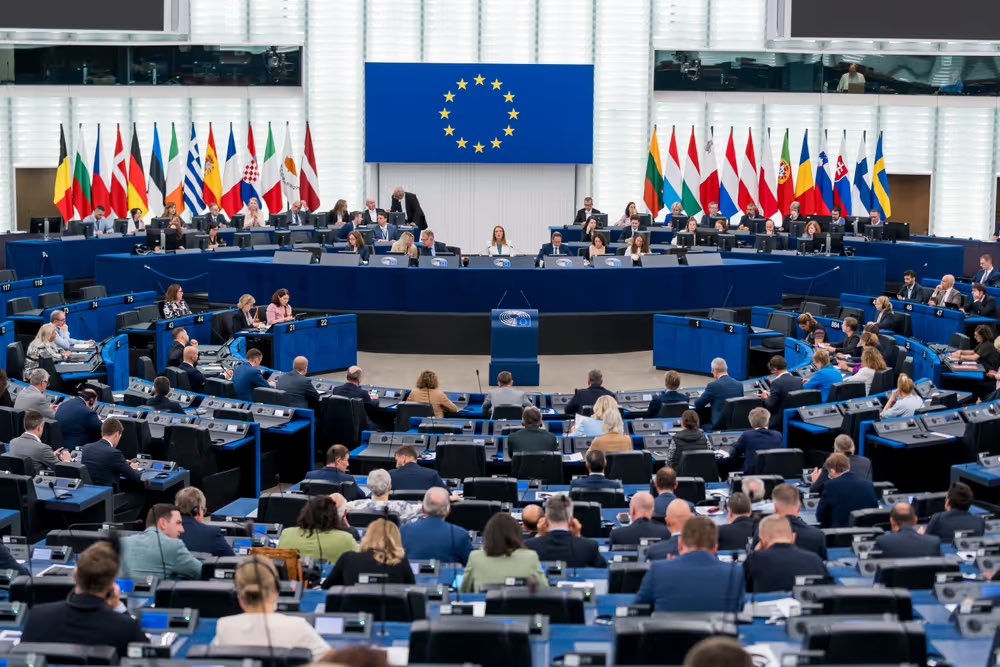
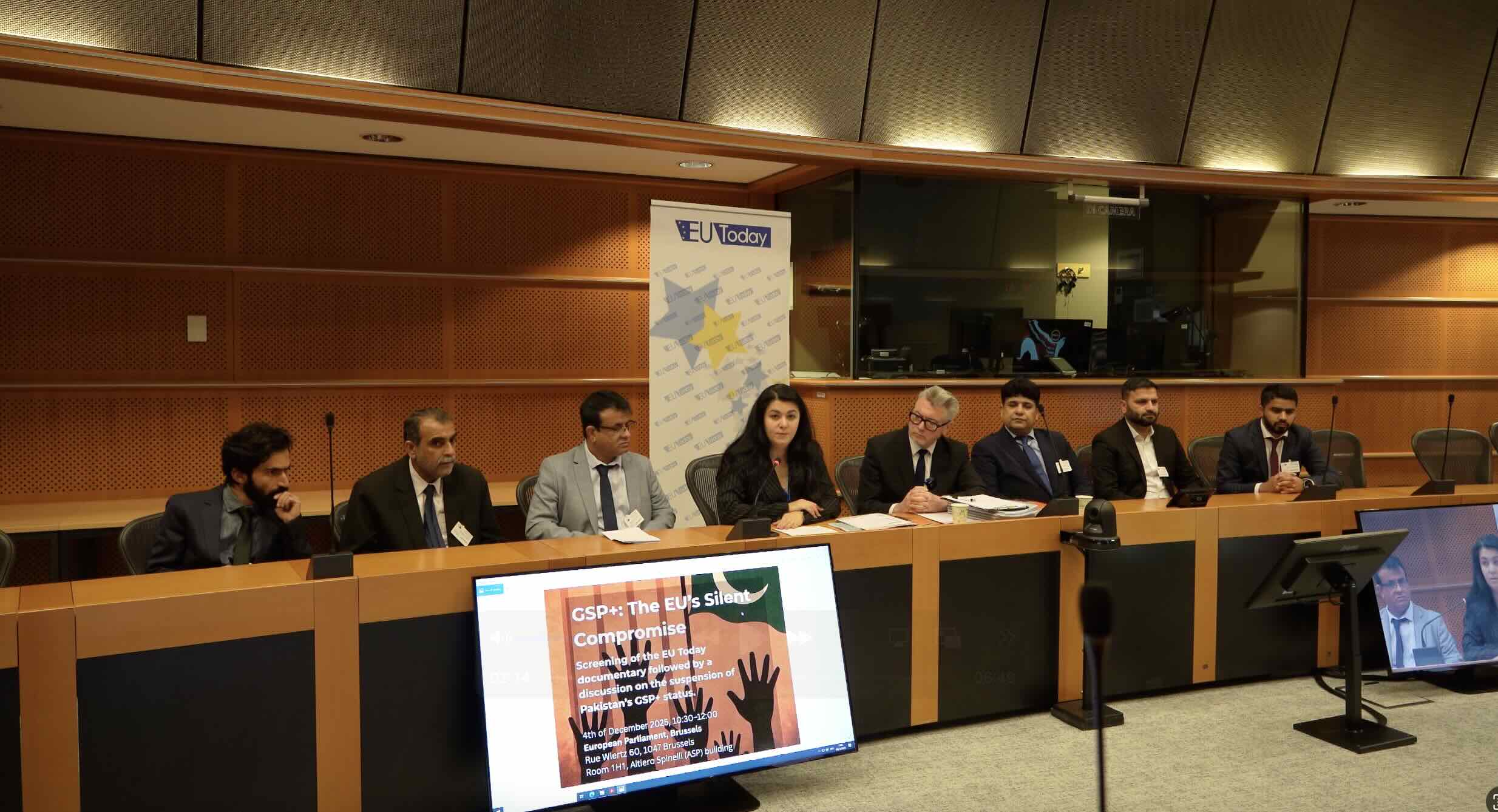
“GSP+: The EU’s Silent Compromise” was the title of a conference and film screening in the European Parliament on 4 December 2025, examining whether Pakistan should retain its preferential trade access to the EU market under the Generalised Scheme of Preferences Plus (GSP+).
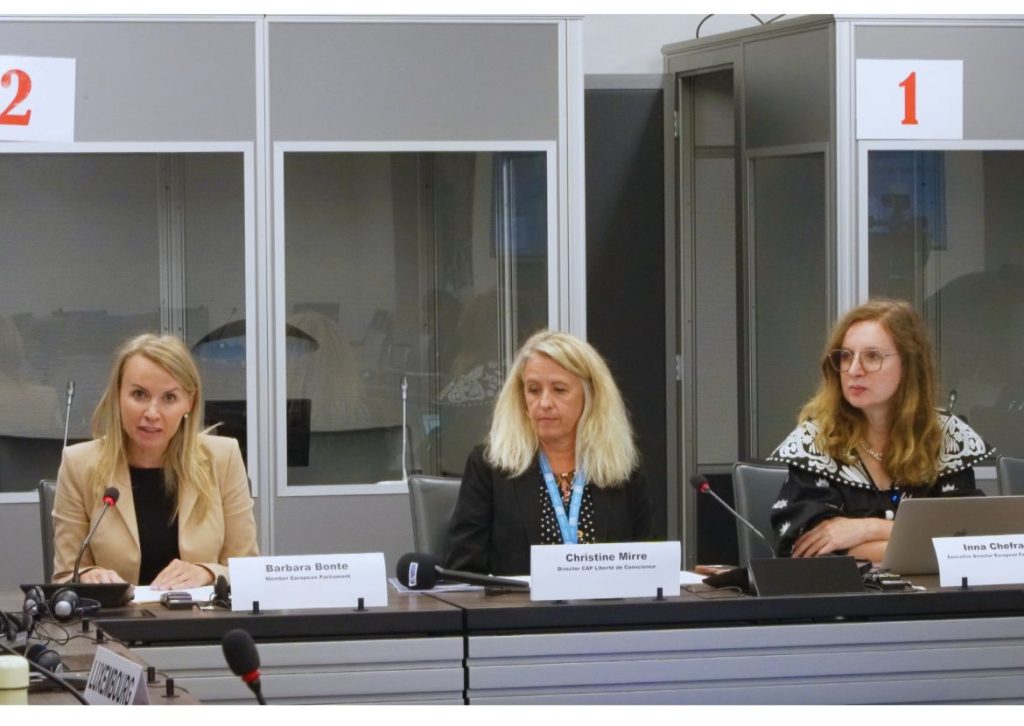
The event, organised by EU Today and hosted by Georgiana Teodorescu MEP of the ECR Group, brought together MEPs, human rights advocates, journalists and campaigners. The discussion focused on Pakistan’s human rights record and the European Commission’s handling of the conditionality attached to GSP+.
Opening the meeting, Teodorescu said that political groups in Parliament often disagreed, but not on this subject. “We don’t get along every time on each topic,” she said, “however on a very, very important topic we are always on the same page and that topic is human rights.”
She said there was growing concern “at the European level on what is happening with the European money” sent to third countries and stressed that MEPs had “a duty towards our voters and towards the European citizens to prioritise their interests first”.
Teodorescu outlined the GSP+ scheme, which links duty-free access to the EU market to implementation of 27 international conventions covering human rights, labour rights, environmental protection and good governance. Pakistan obtained GSP+ status in 2014 and, she noted, “in only one year, in 2015, Pakistan had already doubled its exports, bringing a huge boost to the Pakistan economy”.
The current review cycle ends in 2025, forcing the EU to decide whether to renew or suspend Pakistan’s status under Regulation 978/2012. Teodorescu also pointed to direct EU financial support, saying that Brussels grants Pakistan “about €100 million every year for development and cooperation”, money “taken again from the pockets of the European citizens and gifted to Pakistan” on the condition that human rights are respected and funds are correctly used.
Instead, she argued, “the situation in Pakistan is getting worse day by day and diplomatic dialogue remains resultless”. She listed “misuse of blasphemy laws, enforced disappearances and torture, persecution of religious minorities including Christians, and attacks on journalists, on civil society, and of course on opposition figures” via the Prevention of Electronic Crimes Act. “EU is open and willing to help a lot,” she said, “but certain things must be respected and among them human rights occupy the first conditionality.”
Gary Cartwright, publisher of EU Today, explained why his outlet had made Pakistan and GSP+ the subject of a documentary and a policy paper. EU Today, he said, is “very much a campaigning news and current affairs site”, and after two decades in Brussels he had seen “how important human rights is in every single policy area”. In Pakistan’s case, he said, “it’s failing, it’s failing miserably”.
Cartwright said his team had “found evidence of EU Commission money going to fund madrasa training schools for terrorists”. The Commission, he said, “admitted it but said it was not responsible for how the money it gives is spent”. For him, “this is our money, our taxes funding the training of terrorism. Most of the leaders of the Taliban go through madrasa.”
To make the issue accessible to a wider public, EU Today produced a documentary, already screened at the UN Human Rights Council in Geneva and at the Council of Europe in Strasbourg.
To address the legal dimension, it then issued a white paper, “Pakistan’s GSP+ Non-Compliance: A Case for Suspension”. Cartwright said that after circulation “the European Commission has accepted this and they are going to include this in the evidence that they will be examining in the consultation”. He cited the recent withdrawal of Pakistan’s GSP+ preferences on ethanol as proof that trade measures can be used.
The situation on the ground was described by Dr Naseem Baluch, chairman of the Baloch National Movement. He thanked participants “for giving voice today to one of the most silenced and persecuted nations of our time, the Baloch people”, and said their presence showed “that the suffering cannot be hidden behind borders”.
Baluch called Balochistan “a region rich in resources but deprived of rights”, and alleged that Pakistan’s security establishment had intensified repression against “peaceful political leaders, students, human rights defenders and political activists”. Referring to the killing of Chairman Zubair Baloch, he said: “His death is not just a tragedy. It is a reflection of policy.”
Enforced disappearances, he said, remained “the darkest feature of life in Balochistan”, citing 234 new cases in the first three months of 2025, as well as mass graves and unidentified bodies in what he termed “the cemetery of the unknowns”. He alleged the use of armed drones in the province, including strikes that killed children. “This is not counterterrorism,” he told the meeting. “It is the use of advanced weaponry against an unarmed population.”
Baluch argued that such practices were incompatible with GSP+ conditionality. “When a state engages in enforced disappearances, drone attacks on civilians, torture, mass graves and political repression, it cannot be treated as compliant,” he said. He called on MEPs to “reassess Pakistan’s GSP+ status in light of overwhelming evidence” and to support an independent investigation into abuses in Balochistan.
The question-and-answer session turned to the EU’s response and wider strategic factors. Nigel Goodrich, co-founder and general secretary of the International Movement for Peace and Coexistence (IMPAC), recalled previous decisions to withdraw trade preferences. “The EU temporarily withdrew GSP+ from Sri Lanka in 2010 and for Myanmar in 2021 for far fewer human rights violations than we see today in Pakistan,” he said. “Why do we think Pakistan is being treated as a special case?” He asked “how many more enhanced monitoring missions, road maps, scorecards do we need before we acknowledge Pakistan has zero political will to reform as long as the money keeps flowing”.
Cartwright replied that he was “very cynical about the whole GSP+ concept”, arguing that “the Commission hides behind ongoing dialogue and technical assistance” while the situation on the ground deteriorates.
Filip Dewinter, a Belgian MP from Vlaams Belang, linked the discussion to security concerns inside the EU. “In Europe we are very well aware that Pakistan is a terror state,” he said, claiming that it “hosts, finances and facilitates international terrorist groups on their soil” and is “also responsible for the radicalisation of a lot of young Muslims” in European cities. He suggested that US strategic interests in Pakistan contributed to European caution, but said there was “an opportunity” in the new Parliament for conservative and patriotic groups, working with the ECR, “to find a majority to suspend the GSP+”.
Closing the event, Cartwright said he hoped the documentary, the white paper and the evidence presented would feed directly into the 2025 review. “I hope that we’ve given you something to think about,” he said. “The time for action is now upon us. The time for words, of which we’ve already had too many from the European Commission, is over.”